AI Garmin Integration Coach
A personal AI running coach built from Garmin data, recovery signals, and agent-style planning.
- Status
- In development
- Stack
- Python · Garmin API · Claude API · OpenClaw Agent Pattern
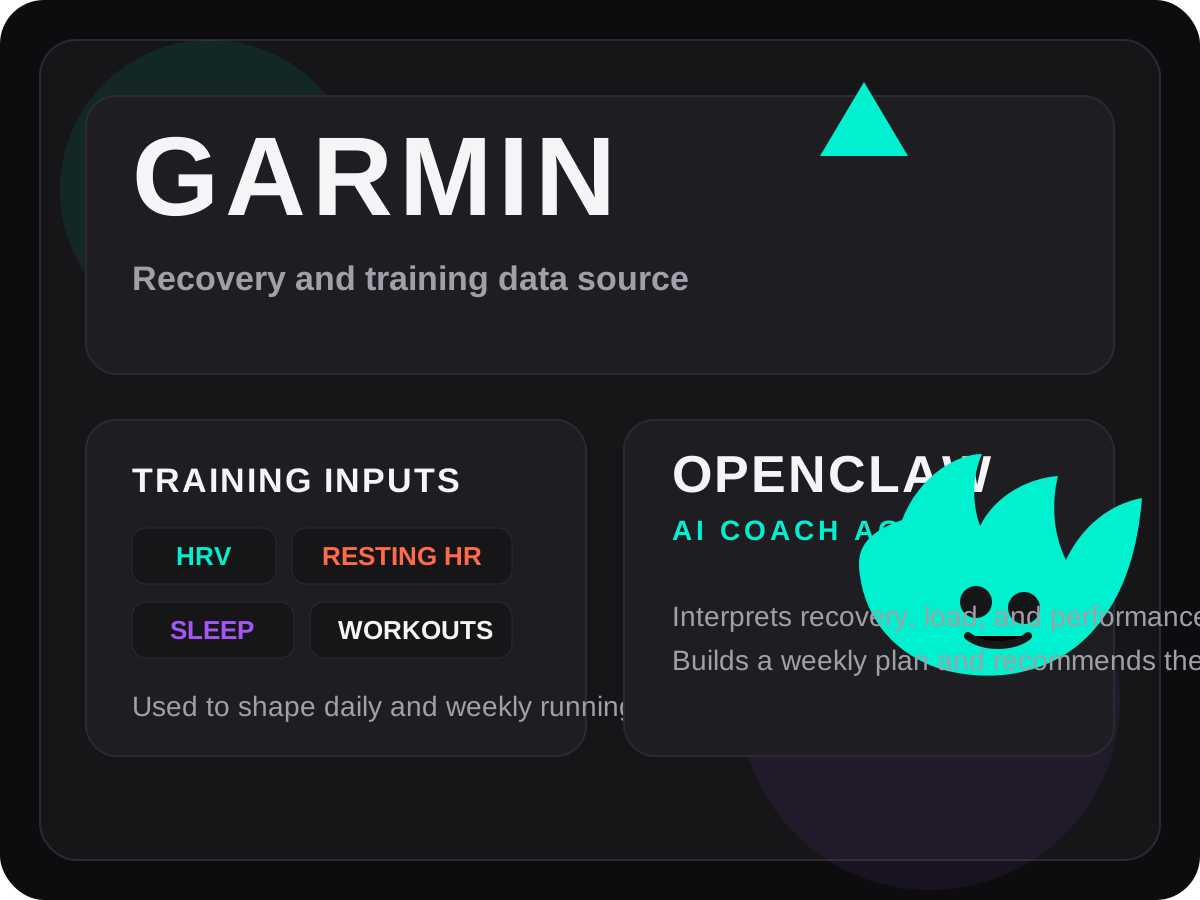
This is a personal project to see whether I can turn my Garmin data into a useful AI coach for running. The idea is to analyse signals like HRV, resting heart rate, sleep quality, training load, and workout performance, then use that context to build a sensible running plan and generate recommendations for each day or week. It is not something I want to launch commercially. I just want to see whether it can work as a practical passion project for my own training.
How it works
Garmin Data Analysis
Uses Garmin health and training data as the core input layer for the coaching system.
Recovery Signals
Looks at signals like HRV, resting heart rate, and sleep to estimate readiness and identify when training should be reduced or adjusted.
Training Performance Review
Analyses recent workouts, pacing, effort, and broader performance trends to understand how training is actually going.
Adaptive Planning
Aims to generate both weekly plans and day-by-day workout recommendations instead of relying on a fixed program.
Agent-Style Reasoning
Designed as a small personal coaching agent that can combine data retrieval, interpretation, and recommendation into one workflow.
Passion Project Scope
This is intentionally a personal experiment rather than a product launch, which keeps the focus on whether the idea genuinely works.
What came of it.
- 1A working proof of concept for an AI-assisted running coach built around my own Garmin data
- 2A way to test whether HRV, sleep, resting heart rate, and workout trends can drive better training recommendations
- 3A small personal agent workflow that is interesting to build even if it never becomes a public-facing project
- 4A technically satisfying experiment in combining quantified-self data with AI planning
The full story
Garmin already captures a huge amount of useful training data, but most of it sits inside dashboards and scores. What I want is a layer above that data: an AI coach that can interpret what is happening across recovery, readiness, and performance and then turn that into decisions I can actually use.
The core idea is to bring together metrics like HRV, resting heart rate, sleep patterns, recent running sessions, pace trends, and broader training performance. Instead of looking at those values one by one, the project would treat them as inputs into a coaching system that can decide whether I should push, maintain, back off, or recover.
That could mean building a week-level plan based on current load and goals, then producing day-level suggestions such as an easy aerobic run, threshold intervals, a rest day, or a longer endurance session. The recommendations should respond to what the data is actually saying, not just follow a static calendar.
I also want the project to have an agent element to it. Rather than being a one-shot prompt, the coaching logic should behave more like a small OpenClaw-style agent for me personally: pulling the right data, interpreting trends, checking constraints, and producing a recommendation with reasoning. The aim is not to build a startup. It is to build something interesting, useful, and technically satisfying for my own running.
Under the hood
- Python
- Core orchestration layer for pulling data, processing metrics, and generating coaching logic
- Garmin API
- Source of health, recovery, sleep, and training data for the coaching workflow
- Claude API
- Reasoning layer for turning raw metrics and trends into structured coaching recommendations
- OpenClaw Agent Pattern
- Agent-style workflow model for coordinating data collection, interpretation, and planning steps
The intended architecture starts with Garmin data ingestion, pulling the metrics that matter for recovery and performance. That raw data then needs a processing layer to normalise readings, compare short-term and long-term trends, and build a current training context.
Above that, the AI layer acts as the coach. Rather than just summarising numbers, it should interpret what those numbers imply for training decisions and produce recommendations at two levels: a broader weekly structure and a more immediate day-level workout suggestion.
The agent framing matters because the system is meant to do more than answer isolated prompts. It should gather the relevant inputs, consider recent history, weigh competing signals, and then return a recommendation with enough explanation that I can judge whether the decision makes sense.
- Recovery metrics such as HRV, resting heart rate, and sleep-related signals
- Training session history including run type, duration, pace, and recent performance patterns
- Planning outputs at both weekly-plan and daily-workout recommendation level
- Goal and constraint inputs such as preferred volume, target events, and recovery limits
- Working out which Garmin signals are genuinely useful for coaching decisions and which are just noise
- Combining recovery and performance metrics without overreacting to short-term fluctuations
- Turning general AI summaries into recommendations that feel like real coaching decisions
- Keeping the system useful and honest when it is only a personal passion project, not a polished product