Game Theory Tournament: A Coding Competition for My CS Students
TL;DR
Watched a Veritasium video on Game Theory, got inspired, and built a full tournament platform so my Year 7–9 Computer Science students could compete in their own Prisoner's Dilemma-style coding competition.
Benjamin Hyde
Education Leader & AI Builder
This week was one that I've had in my head for quite a long time. I'm a bit of a nerd and watched a Veritasium video about Game Theory (linked at the bottom) which spoke about a programming competition that was run way back. I was inspired by that and wanted to see what it would be like if I ran a competition for my Computer Science students. These guys are my mini experts at school, super motivated and really competitive with each other, so I thought getting them into a competitive environment coding would be an interesting experiment.
To get it up and running I needed a platform where students could write some simple Python code and also test their code against some sample bots. This meant developing a little API to provide the agents with some information to make decisions. The main challenge here was making sure that it was pitched at a level that was accessible to my Year 7–9 boys and their developing Python knowledge.
Building the Platform
To start with I metaprompted to get my interface prompt using Claude. This was a specific choice, because I think the Claude models are currently the best at planning tasks. So for that reason I provided a fairly in-depth prompt to Claude to then flesh out. We went back and forth a few times to get all of the details we were looking for.
After the metaprompting stage, I copied and pasted the prompt across to Codex, which is my current coding agent. The reason for switching between the two is just a current preference for initial development, with what I'm finding is better results from Codex in the initial spin up of a design. After that initial development, I spent some time testing the interface and made some small changes.
To ensure some security was implemented properly I then opened the project folder in Claude Code and asked it to make a pass at the code specifically looking to identify any errors or vulnerabilities. Is it perfect? Probably not, but it gives me a chance to find if there are any issues that Codex has missed in the back-and-forth, or potentially any issues that I've introduced after making changes to the initial code.
What Shipped
In terms of functionality, I needed some way for the students to sign in easily and then submit their code (so I didn't have to collate it in emails or anything like that), as well as some form of tournament-running functionality that all happened automatically.
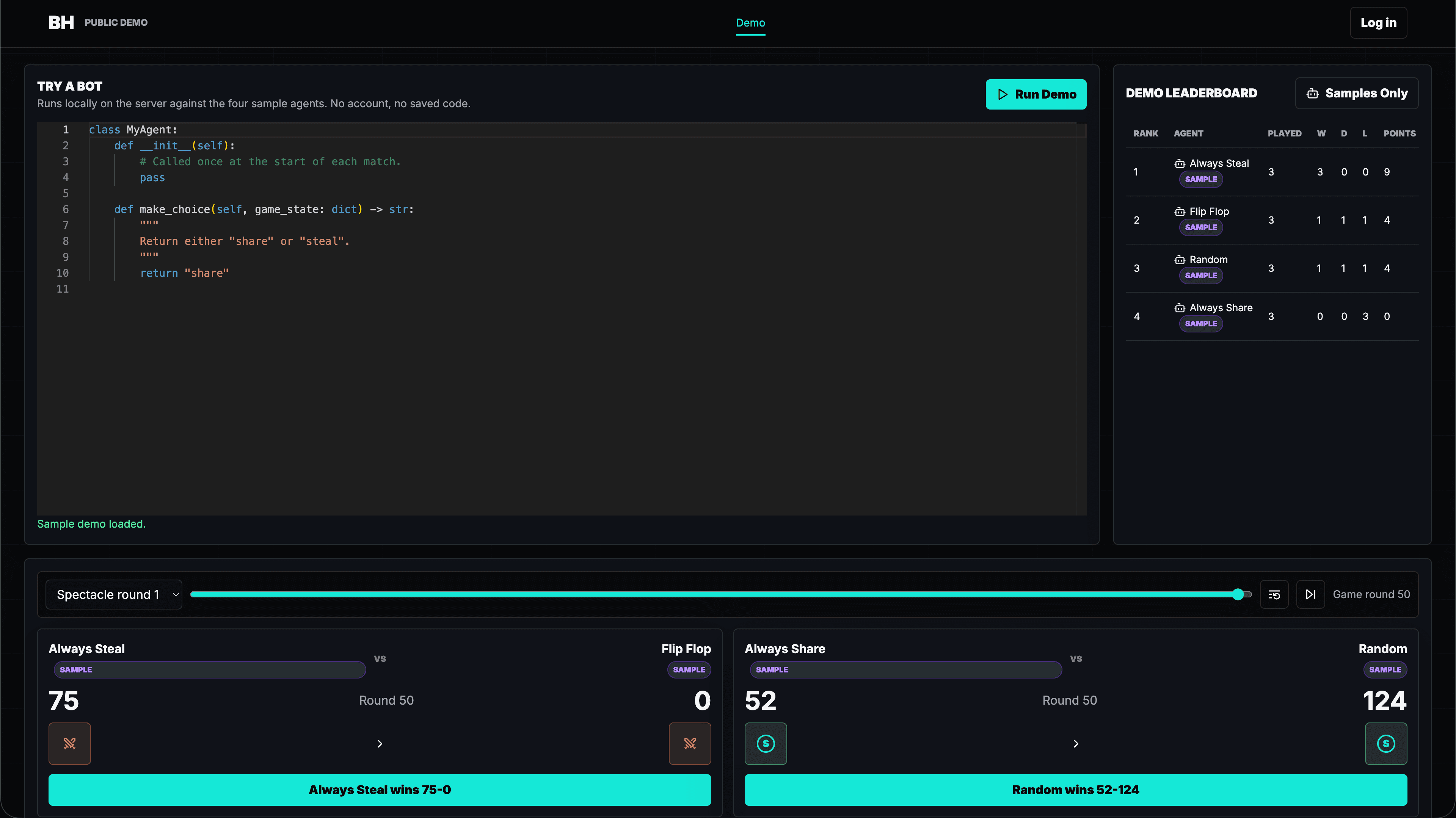
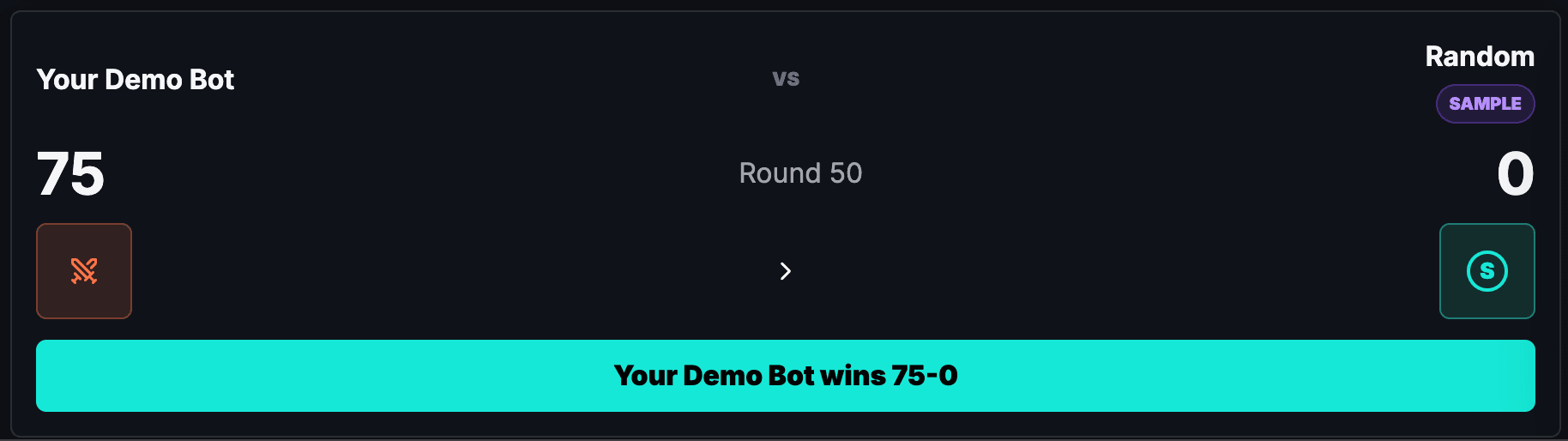
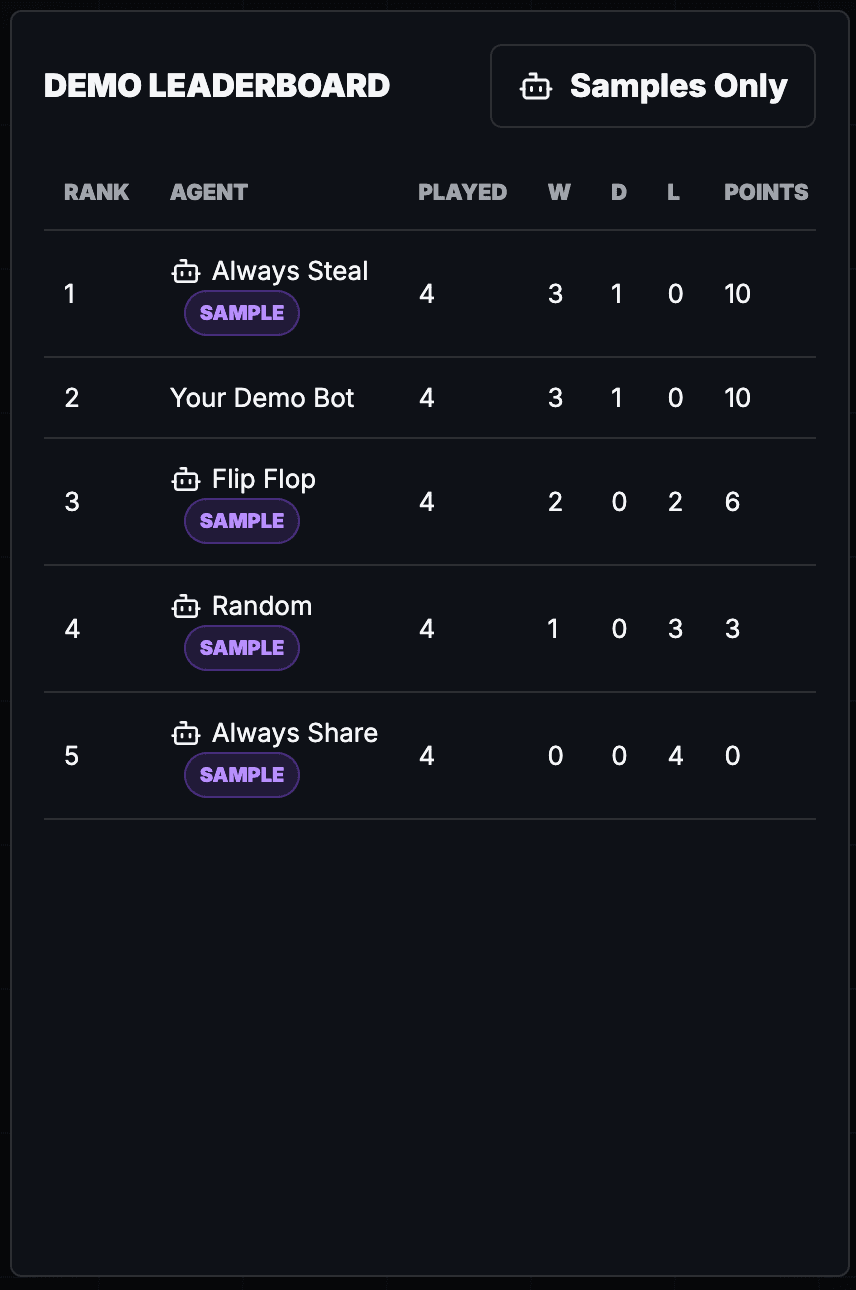
At this stage I realised having some bots to test against would be really useful for the students, so I built out the Public Demo part of the site, but then also decided it was worth deploying that functionality within the student pages so that they could see their agent in action without needing to get back to the public demo.
Launching with the Boys
After the implementation, it was time to launch. In our Tuesday Morning Tea session today, I was able to generate student tokens without issue and have the boys log in to the system.
Below are two documents that I got Claude Opus 4.7 to generate that we then used in the session. I delivered the PowerPoint to the boys to introduce the concept and have provided them with the document as some backup information that they can refer to later on.
I'll check back on here in a little while. I've given the boys 2 weeks to develop their strategies and then we will run a version of the tournament. I'll provide a bit of a report about how the whole thing ran.
Screenshots
Build Notes
Approach
Metaprompt the design in Claude, build the initial implementation in Codex, review for security with Claude Code, deploy via terminal Claude on the web server.
Tools Used
Claude (metaprompting & planning), Codex (initial development), Claude Code (security review), Python, Docker
What Worked
Students logged in and submitted code successfully on day one; token generation was seamless and the public demo gave them an instant feedback loop.
What Failed
First version: nothing critical failed at launch. Security review surfaced some issues caught before students used it.
What's Next
Run the full tournament in two weeks and report back on strategies, results, and what the boys learned from competing against each other.

